

[The Doctor : Master Physician Report] For Anxious Cancer Patients, Explanation Is Also ‘Treatment’: Dr. Son Tae-il of Sihwa Hospital, the Surgeon Who Solves Problems on the Front Line
Putting patient safety first rather than insisting on any one surgical technique
 장인선 기자

‘A doctor renowned for curing illness well.’ That is the dictionary definition of a master physician. The standards for a master physician can change with the times and circumstances, and today many doctors are making the world healthier not only through clinical experience and skill but also through volunteer work, research, entrepreneurship and other activities. While university hospitals focus on serious diseases and highly complex treatments, primary and secondary hospitals are the first gateway to protecting everyday health.
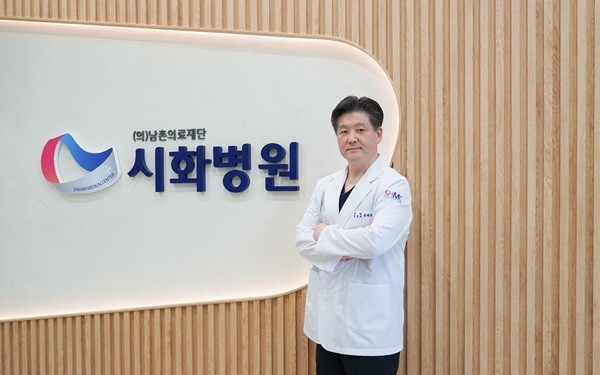
Through its ‘The Doctor : Master Physician Report’ column, Health Kyunghyang introduces master physicians, at university hospitals as well as primary and secondary hospitals, who have quietly devoted themselves to their specialties or who practice a principled medical philosophy through diverse activities beyond the consultation room, selected on the basis of ▲expertise in their clinical field ▲evidence-based principles of care ▲patient communication and contribution to the local community. This edition features Dr. Son Tae-il of the Department of Surgery at Shihwa Medical Center. <Editor’s note>
Dr. Son Tae-il’s career path
Dr. Son graduated from Yonsei University College of Medicine and earned a master’s degree from its graduate school. After completing his residency in the Department of Surgery at Yonsei University College of Medicine, he built his expertise as a clinical fellow in upper gastrointestinal surgery. He then served as an assistant professor in the Department of Surgery at Eulji University School of Medicine and as an assistant professor of gastrointestinal surgery in the Department of Surgery at Yonsei University College of Medicine, and he now sees patients at Shihwa Medical Center.
His areas of specialty include gastrointestinal diseases such as gastric cancer, gastrointestinal stromal tumors (GIST), gastroesophageal reflux and hiatal hernia, as well as bariatric and metabolic surgery and benign abdominal conditions such as gallbladder disease and hernias. He is also a full member of the Korean Gastric Cancer Association, the Korean Laparoendoscopic Gastrointestinal Surgery Study Group (KLASS), the Korean Association of Robotic Surgeons (KAROS) and the Korean Society of Surgical Oncology.
“I thought of a surgeon as someone who puts what they have learned into practice with their own hands to solve a patient’s problem. To me, that looked exactly like a ‘problem solver.’”
Dr. Son dreamed of becoming a surgeon from his days as a medical student. From the start, he had a vague but clear wish to work in essential medicine, and he was drawn to the sight of his mentors and senior colleagues solving patients’ problems directly through surgery. Having often been told he was good with his hands also encouraged him to choose surgery. In particular, because surgery played a major role in gastric cancer treatment at the time, he chose gastrointestinal surgery as his specialty, believing it was where he could best fulfill his role as a ‘problem solver.’
After many years operating on gastric cancer patients at university hospitals, he is now walking a new path at Shihwa Medical Center, a regional hospital.
“A surgeon never operates alone,” Dr. Son said. “Shihwa Medical Center has excellent medical staff and systems to operate alongside, so I judged that I could fully apply the clinical experience I built at university hospitals.” Another reason for his choice, he said, was that whereas university hospitals required him to balance research and teaching with patient care, a regional hospital would allow him to focus more on treating patients and devote himself to them.
■More important than the technique: ‘What is safest for the patient?’
Gastric cancer is a cancer for which treatment guidelines and the appropriate extent of surgery are relatively well standardized. For this reason, Dr. Son places greater importance on how faithfully the established principles are followed and how safely surgery is performed without complications than on new surgical techniques themselves.
The surgical environment has changed dramatically. Dr. Son belongs to a generation that learned both open and laparoscopic surgery. Minimally invasive approaches such as laparoscopic and robotic surgery have recently become a mainstay of gastric cancer surgery, but his firm rule is that the latest technique is not the best for every patient.
“Just because laparoscopic surgery is the trend does not mean it is right to insist on it,” Dr. Son said. “For some patients, a long anesthesia time is a burden, or open surgery is more suitable because of their surgical history.”
In the end, he says, the safest method for each patient must be chosen by considering age, overall health, comorbidities and surgical history. He approaches every operation with the ultimate goal of minimizing postoperative complications so that patients can once again enjoy a good quality of life.
■Is removing the cancer the end? Looking ahead to ‘eating after surgery’
What he pays particular attention to is ‘reconstruction.’ Gastric cancer surgery does not simply remove the visible lesion. Taking into account the possibility that cancer cells have spread to surrounding areas, 60 to 70 percent of the stomach is removed. How the gastrointestinal tract is reconnected after surgery therefore affects the patient’s eating and daily life.
Accordingly, Dr. Son gives as much thought to the reconstruction method that properly connects the remaining stomach and intestine as he does to removing the cancer safely. This stems from his belief that the goal is not merely for patients to get through surgery but for them to eat with as little discomfort as possible and return to their normal daily lives.
“When a patient complains of discomfort eating after surgery, I always ask myself whether a different reconstruction method might have been a little better,” he said. “Rather than promoting a particular surgical technique, I focus on paying close attention to reconstruction so that patients can return to an ordinary daily life.”
In the operating room, he treats ‘composure’ as his most important principle, because rushing to resolve an unexpected situation can make it worse. Before surgery, he reviews imaging with the assisting medical staff to thoroughly understand the patient’s vascular structure and prepare for anticipated variables.
■“Explaining thoroughly, even if it takes long”: medicine for patients and their families
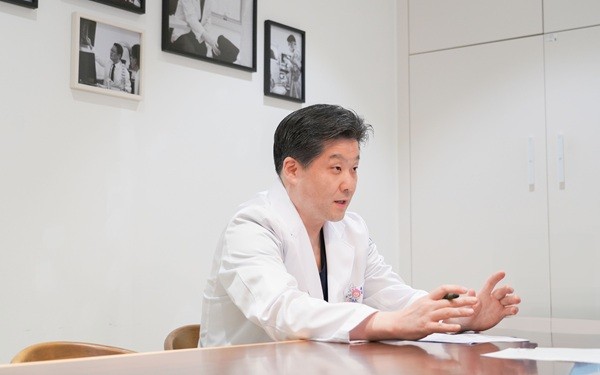
Outside the operating room, what Dr. Son values most is ‘explanation.’ He devotes so much time to explaining in the consultation room that patients and their families sometimes say he “talks too long.” Because a cancer diagnosis alone causes great anxiety, he believes patients must fully understand their condition and why a given treatment is needed.
When giving important explanations, he asks that family members listen as well whenever possible. He explains the treatment process and expected outcomes in detail using objective figures, and reassures patients by drawing on Korea’s gastric cancer treatment outcomes.
“People listen carefully to an expert’s explanation even when signing up for insurance or a savings plan, so shouldn’t patients facing surgery hear an even more detailed explanation?” Dr. Son said. “Hearing a lot of information may feel unsettling at first, but I believe a thorough explanation ultimately becomes medicine for the patient.”
This philosophy has been strengthened by the patients he remembers. Rather than those whose treatment went smoothly, he says, it is the patients who endured difficult times with him who stay in his memory the longest.
“I especially remember a patient who had to undergo chemotherapy after surgery during the COVID-19 pandemic. The patient was so anxious about infection that they were reluctant even to go outside, but they endured surgery and chemotherapy well and, after five years, were finally declared cured.”
“It is especially rewarding to see patients who struggled during treatment become healthy over time,” Dr. Son said. “I feel a great sense of fulfillment when they recognize the efforts of the medical team who did their best throughout the process and say thank you.”

■University hospital experience, now in the community: “A doctor who is close by when needed”
Many patients still think first of large hospitals in Seoul when diagnosed with cancer. However, Dr. Son emphasizes that if a regional hospital has sufficient specialists and a collaborative care system, receiving prompt treatment close to home is a great advantage for patients.
Gastric cancer treatment, too, cannot be completed by a surgeon alone. It requires close collaboration among multiple departments, including gastroenterology, medical oncology and radiology. “Because Shihwa Medical Center has this kind of multidisciplinary system, I judged that I could fully apply the experience I built at university hospitals in the community as well,” Dr. Son said, stressing that he has no regrets about his choice.
He has also set a goal of further expanding treatment options. If robotic surgery becomes possible in the future, building on the current system, he believes he could offer a wider range of treatments depending on each patient’s condition.
What does Dr. Son consider the qualities of a good surgeon? Above all, he named ‘surgical skill’ and ‘being there when needed.’
“A surgeon should, of course, be good at surgery. But it is also important to be close by and able to respond immediately when a patient needs you. Patients don’t have to remember me. But if I am remembered as a doctor who explained thoroughly and treated them with sincerity, a ‘problem solver’ who was there when needed, I think I would be satisfied.”
His ultimate goal is not grand either: to fulfill his role as a surgeon at his patients’ side.
“In the end, I believe my duty is to do my best where I have chosen to be. As long as my stamina allows, I want to be a surgeon who keeps operating on the front line for a long time.”
■FAQ
Q1. What are Dr. Son Tae-il’s areas of specialty?
A. Gastrointestinal diseases including gastric cancer, gastrointestinal stromal tumors (GIST), gastroesophageal reflux and hiatal hernia, as well as bariatric and metabolic surgery and benign abdominal conditions such as gallbladder disease and hernias.
Q2. Is laparoscopic or robotic surgery always the best option for gastric cancer?
A. Not necessarily. For some patients, a long anesthesia time is a burden, or open surgery is more suitable because of their surgical history, so it is important to choose the safest method by considering age, overall health, comorbidities and surgical history.
Q3. Can eating become uncomfortable after gastric cancer surgery?
A. Because gastric cancer surgery removes 60 to 70 percent of the stomach, how the remaining stomach and intestine are reconnected (reconstruction) affects eating and daily life. That is why the reconstruction method is carefully considered so that patients can eat as comfortably as possible after surgery.