


The Rise of Laparoscopic Surgical Robots
Da Vinci's Dominance and the Path to Localization with Revo-I
- surgical robot
- laparoscopy
- Da Vinci
- localization
- Revo-I
 이원국 기자
① Laparoscopic surgical robot
In 2018, the government announced the '4th Basic Science and Technology Plans' to prepare for the era of rapid aging and low fertility. Among them, 'surgical robot' fused with ICT was selected as one of them. The surgical robot is of great help to both patients and medical staff by curtailing the operation time and minimizing the possibility of bleeding and infection. Recently, integrated with the 4th industrial revolution, the surgical robot market, which accounts for only 3-5% of surgical operations, is expected to grow even more significantly. In fact, according to Markets and Markets, the surgical robot market will reach $11.8 billion (KRW 14.71.5 trillion) by 2025, growing at a CAGR of 12%. To this end, Health Kyunghyang prepared a particular article called [Evolving Surgical Robot] as a New Year's special. < Editor's Note>
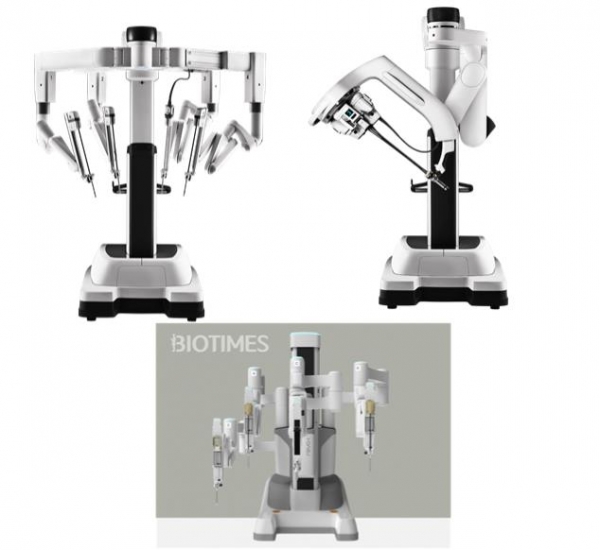
Currently, the field in which surgical robots are most actively involved is 'laparoscopy. 'Traditional open surgery had side effects such as excessive bleeding, scarring, and prolonged recovery time. On the other hand, robotic surgery intensely responds to patients and medical staff due to its minimally invasive surgical procedures and reduced operation time.
■The world's most used 'Da Vinci surgical robot'
An example of surgical robots is Intuitive Surgical's 'Da Vinci.' Da Vinci was approved by the US FDA in 2000 as a laparoscopic surgical robot and is being applied to ▲cervical cancer ▲, prostate cancer ▲, colorectal cancer ▲, pancreatic duodenal resection ▲, gastric cancer ▲heart valve surgery.
Da Vinci, which has been developed up to the fourth generation, consists of three pieces of equipment: the Surgeon console (robot arm and endoscope), the Patient Cart (multi-robot assist device), and the vision system (monitor) The system requires a surgeon on the surgery console to perform the surgical maneuver. The robot arm connected to the surgical instrument translates the hand movements of the surgeon into precise movements.
The four footrests on the console can induce hemostasis through electrocautery or control the vertical and horizontal movements of a surgical control device or laparoscopic camera. Since the surgeons operate while viewing the 3D image magnified 10 to 15 times without inversion, they can minimize damages to nerves and blood vessels around the surgical site.
Da Vinci accounts for 85% of robotic surgery in the United States, and 117 units have arrived in Korea as of the end of September last year. Severance Hospital, which introduced da Vinci in Korea, conducted 30,000 robotic surgeries last year first in the world. In addition, Yongin Severance Hospital, which introduced the latest system, the 4th generation Da Vinci, succeeded in laparoscopic high-strain renal pelvis-internal ureteral anastomosis by using a robot for the first time in Korea. Seoul St. Mary's Hospital also introduced the second-generation Da Vinci in 2009 and three additional fourth-generation da Vinci units twice in 2016 and 2018.
Director Song Gyo-young (gastrointestinal surgery) from Seoul St. Mary's Hospital Robotic Surgery Center explained, "The latest version of the robotic surgical equipment inserts multi-joint instruments and cameras with minimized tiny incisions, so precise and sophisticated surgery is achievable."
■Accelerating the localization of the expanding 'laparoscopic surgical robot.'
Although the utilization of the laparoscopic surgical robot Da Vinci grows, the price per unit reaches billions of won, and maintenance costs approximately 200 million won per year. So due to such cost burden, only some large hospitals utilize Da Vinci. To this end, some domestic companies are spurring the 'localization' of surgical robots.
Among those companies, Mirae Company is the leader in laparoscopic surgery robots. Mirae Company has developed the laparoscopic surgical robot 'Revo-I,' which was selected as the '10th Innovative Medical Device' by the Ministry of Food and Drug Safety in May of this year and successfully commercialized it.
Revo-I completed clinical trials for cholecystectomy and prostatectomy at the Severance Robotic Endoscopic Surgery Center in March 2017 to evaluate safety and efficacy. In addition, last year, the effectiveness of hysterectomy and gastroenterectomy using Revo-I at the Catholic International Skills Education Center was successfully established.
If the surgical robot is localized, various positive ripple effects will emerge, such as lowering the operating cost. However, experts believe that domestic sales of Revo-I will be complex due to Da Vinci's aggressive pricing policy.
Professor Woong-Gyu Han (Department of Urology) at Severance Hospital Robotic Endoscopic Surgery Center commented, "it would be challenging to use Revo-I right away for high-level surgery like cancer surgery because general hospitals perform a lot of specific surgeries." "However, as the second laparoscopic surgical robot developed in the world, Revo-I has sufficient technological potential to expand indications gradually," he counted.


