


Understanding Dermal Filler Injections: Risks and Precautions
Navigating Side Effects, Accurate Diagnosis, and Consultation Protocols
- filler injections
- side effects
- delayed-type hypersensitivity (DTH)
- hyaluronic acid
- consultation
 K-health Media

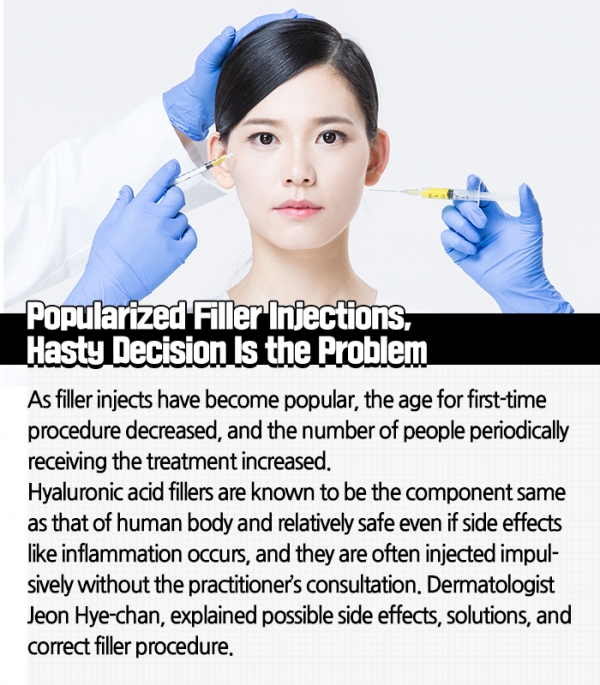




CARD 1 Popularized Filler Injections, Hasty Decision Is the Problem
As filler injects have become popular, the age for first-time procedures decreased, and the number of people periodically receiving the treatment increased. Hyaluronic acid fillers are known to be the same component as the human body and relatively safe even if side effects like inflammation occur, and they are often injected impulsively without the practitioner’s consultation. Dermatologist Jeon Hye-chan, explained possible side effects, solutions, and correct filler procedure.
CARD 2 A Case of Filler Side Effects
Ms. L (42 years old) had filler injections several times on her sunken eyes, cheeks, and nasolabial folds. About a year ago, she had visited clinic “A” and signed consent forms, paid for the procedure, and went through topical anesthesia after consulting with a non-practitioner counselor. The doctor only mentioned only about the design right before the procedure. But not long ago, she caught a cold, and since then, the injected areas turned red, hardened, and swelled with pain. After having looked up on the internet, she found that her symptoms are similar to that of delayed-type hypersensitivity (DTH) reaction. She appealed to the clinic, but the counselor didn’t even know what DTH was. The doctor promised to do his best to cure, but the clinic has completely lost her trust.
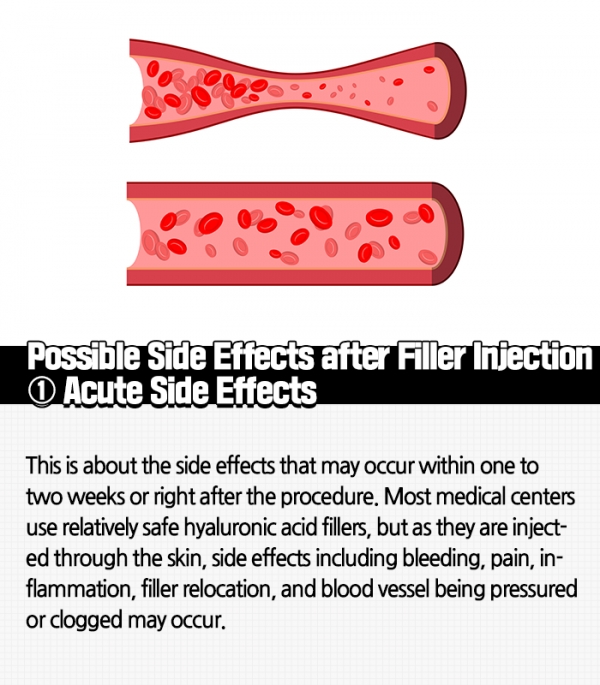
CARD 3 Possible Side Effects after Filler Injection ① Acute Side Effects
This is about the side effects that may occur within one to two weeks or right after the procedure. Most medical centers use relatively safe hyaluronic acid fillers, but as they are injected through the skin, side effects including bleeding, pain, inflammation, filler relocation, and blood vessels being pressured or clogged may occur.
CARD 4 Possible Side Effects after Filler Injection ② Late Side Effects
It is when the side effects occur while the filler remains for two weeks to a year. Generally, the symptoms appear as a hard nodule, inflammation from infection, post-inflammatory hyperpigmentation and telangiectasia, scarring, fat atrophy, and aseptic abscess.
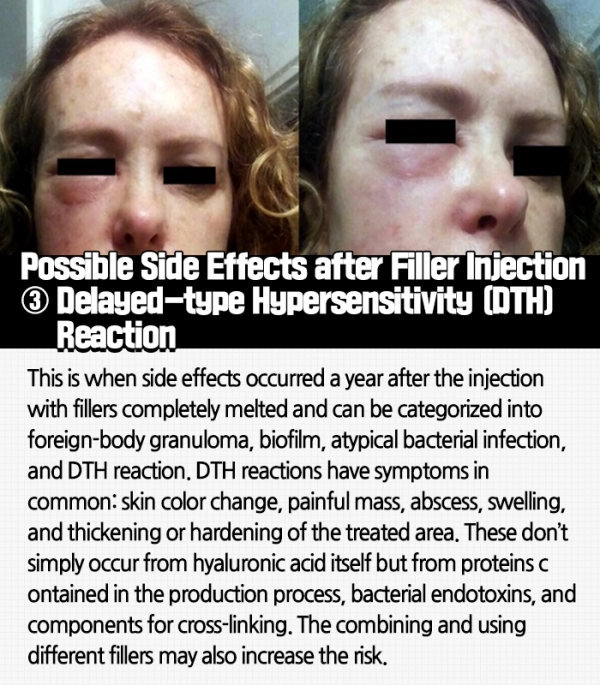
CARD 5 Possible Side Effects after Filler Injection ③ Delayed-type Hypersensitivity (DTH) Reaction
This is when side effects occurred a year after the injection with fillers completely melted and can be categorized into foreign-body granuloma, biofilm, atypical bacterial infection, and DTH reaction. DTH reactions have symptoms in common: skin color change, painful mass, abscess, swelling, and thickening or hardening of the treated area. These don’t simply occur from hyaluronic acid itself but from proteins contained in the production process, bacterial endotoxins, and components for cross-linking. Combining and using different fillers may also increase the risk.
CARD 6 The Cause of Ms. L’s Side Effects
The last filler procedure she had is most likely to be the problem. But if she had been consistently having filler injections for years, the possibility of DTH reactions cannot be ruled out. To find exact causes or symptoms, you can try a skin allergy test, bacterial culture test, and biopsy. However, DTH reaction has a low incidence and requires three to four weeks to examine.
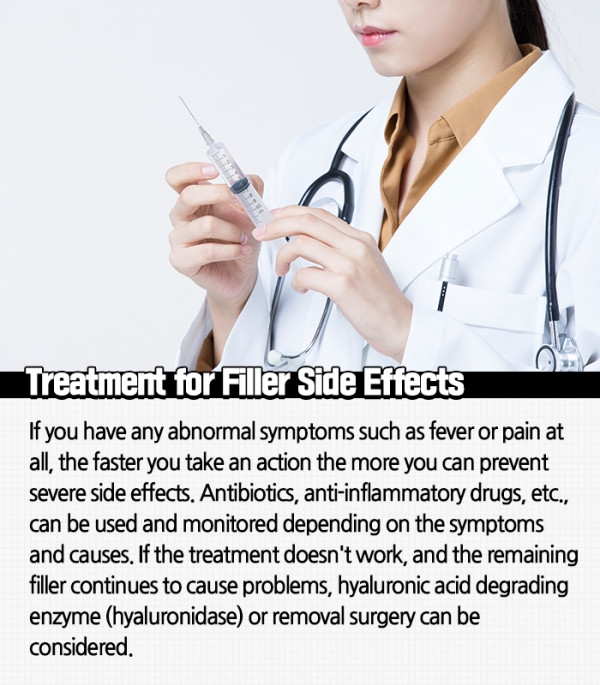
CARD 7 Treatment for Filler Side Effects
If you have any abnormal symptoms such as fever or pain at all, the faster you take an action the more you can prevent severe side effects. Antibiotics, anti-inflammatory drugs, etc., can be used and monitored depending on the symptoms and causes. If the treatment doesn't work, and the remaining filler continues to cause problems, hyaluronic acid degrading enzyme (hyaluronidase) or removal surgery can be considered.
CARD 8. Correct Ways to Inject Dermal Fillers ①Consulting with Practitioner (Doctor)
Having enough consultation with a practitioner is most important. If you had a filler injection before, you must let the doctor know about the products and the abnormal symptoms you had after the procedure. A practitioner’s close examination and skillful experience determine the result of filler injection. In some cases, patients make decisions after consulting only with a non-practitioner, which must be avoided as this is illegal.
CARD 9. Correct Ways to Inject Dermal Fillers ②Staff’s Professionalism
Even fillers of the same ingredient have differences in adhesion and safety depending on the manufacturer, product quality, and manufacturing process. Therefore, it is necessary to consult with a doctor with accurate knowledge of anatomical structures to select a product, procedural sites, and dose. Medical staff should stick to the basics of always disinfecting thoroughly in case of infection, using a blunt cannula in anatomically dangerous areas, and regurging the syringe before injection to check if the needle is in the vessel.
CARD 10 Advice: Dr. Jeon Hye-chan, dermatologist and advisory committee member of K-Health
“Many people believe fillers are safe but making impetus decisions may cause various side effects. Before the procedure, consult enough with a practitioner and be aware of possible side effects.”
•This post is created from the article published on December 24, 2020
https://www.k-health.com/news/articleView.html?idxno=51634


