

Ultrasound Lifting Enters the Era of Precision Tailored to Facial Contours
[Interview] Dr. Geonhong Lee, Hong Skin Clinic
- ultrasound lifting
- HIFU
- curved cartridge
- LINCURVE PRO
- facial lifting
- skin elasticity
- non-surgical lifting
- dermatology
- K-beauty
- aesthetic medicine
- fat layer treatment
- combination treatment
- Hong Skin Clinic
- Dr. Geonhong Lee
- Korea aesthetic dermatology
- Newpong
 장인선 기자
Ultrasound lifting is a non-invasive procedure that improves skin elasticity by delivering ultrasound energy to targeted areas. With minimal downtime, it has gained significant attention among people with busy lifestyles.
In this context, Newpong, a Korean medical device company, has addressed the limitations of conventional flat HIFU devices by developing the world’s first curved HIFU system, designed to reflect the natural contours of the face. By taking facial contours and anatomical structures into account, more precise procedures are possible, allowing treatment strategies to be tailored more closely to each patient’s skin characteristics and treatment goals.
Through this special interview series featuring perspectives from clinical practice, Health Kyunghyang takes an in-depth look at the clinical significance of curved HIFU in ultrasound lifting procedures. We hope the series helps readers understand not only technological advances, but also the importance of safe and precise aesthetic procedures. <Editor’s Note>
■ Table of Contents
① Kwang-jae Lee, Head of New Pong Research Institute
② Dr. Sin-hye Park, Miho Clinic
③ Dr. Geon-hong Lee, Hong’s Skin Clinic
④ Dr. Bruno Vargas, CBV Clinic in Brazil
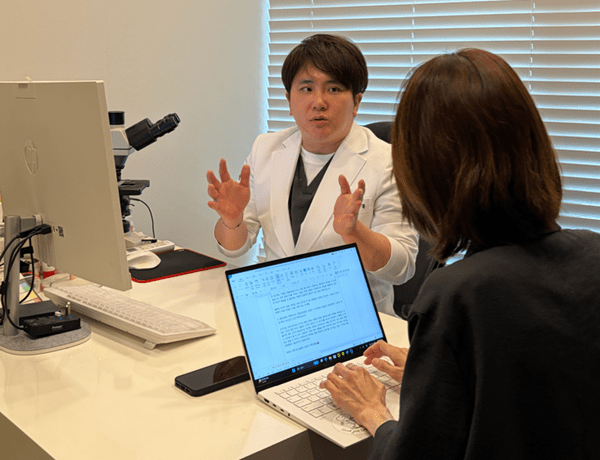
Recently, the era of lifting procedures has shifted to one where the precision of energy delivery is more important than the intensity. In particular, Newpong's curved HIFU (High-Intensity Focused Ultrasound) device, LINCURVE PRO, based on a design that takes facial contours into account, is garnering attention for enhancing convenience for medical staff and improving the treatment experience for patients. We met with Dr. Geon-hong Lee of Hong Skin Clinic to discuss these developments.
Q. Why is ultrasound lifting gaining attention?
The biggest advantage is that you can experience the effects of the procedure quickly. While radiofrequency or laser devices often show results gradually over time, with ultrasound lifting, some patients notice improvements immediately after the procedure, and others experience the effects within a maximum of two weeks. I believe the ability to expect immediate effects and predictable results is the reason why ultrasound lifting is consistently chosen.
Q. Advancements in equipment also played a role. What were the limitations in the past?
The human face is a curved surface, not a flat one. However, since existing cartridges (the parts that touches the skin) have a flat structure, they often adhere closely to the center of the face but lift away from the sides. Consequently, thermal energy could not be delivered evenly to the skin, and some energy was inevitably lost. Furthermore, because stronger pressure was required to deliver energy to the desired depth, there was a greater risk of side effects such as fat atrophy.

Q. What is the biggest change since the introduction of curved devices?
Previously, it was necessary to repeatedly press and release to conform to the contours of the face, but the curved type naturally follows the curves of the skin, eliminating the need to apply excessive force. Thanks to this, the procedure has become much smoother and the treatment time has been reduced. Medical staff experience less fatigue, and the risk of side effects such as burns or fat atrophy has decreased, allowing patients to receive the procedure safely and comfortably.
Q. How satisfied are patients with the treatment?
The change most frequently mentioned by patients is that it is less painful. The curved cartridge adheres closely to the contours of the face, ensuring that thermal energy is delivered relatively evenly rather than concentrating in one spot. Consequently, pain is relatively less even under the same energy conditions, and satisfaction after the procedure tends to be high.
Q. To which type of patients is ultrasound lifting primarily recommended?
Ultrasound lifting is a procedure that targets the fat layer. Therefore, high efficacy can be expected in patients with facial fat and reduced skin elasticity. It can also be a good treatment option for patients seeking to improve skin elasticity. Since ultrasound allows for adjustment of the irradiation depth, the procedure can target shallow layers for skin texture improvement or deeper layers for elasticity improvement.
On the other hand, ultrasound lifting is not recommended for patients with very little facial fat or very thin skin, as it can actually worsen cheek hollowing.

Q. The physician's expertise also plays a critical role, especially in lifting procedures.
Personally, I tend to perform scalp lifting quite often. There is a thick layer of fascia near the temples; by targeting this area first and then sequentially treating the side cheeks and jawline, you can expect an upward lifting effect similar to that of a thread lift. However, scalp lifting requires a deep understanding of anatomy, and the outcome depends on carefully planning which areas to treat and in what order.
Combination procedures, which involve receiving multiple treatments together, are also becoming the trend.
In particular, since ultrasound allows for the adjustment of irradiation depth, performing a lifting procedure tailored to the desired layer after filler treatment can yield complementary effects. For patients with little facial fat, it is also a good idea to perform an ultrasound lifting procedure after adding volume with fillers and waiting a certain period.
Q. What advice would you give to consumers considering a lifting procedure?
While the latest equipment is important, what ultimately determines the outcome is the experience of the medical team in establishing the right energy and treatment plan for the patient . It is wise to choose a medical team that presents a customized treatment plan after thoroughly analyzing your facial features and skin condition.